Abrasive Media for Sandblasting Equipment and Abrasive Blasting Media Applications
Abrasive media for sandblasting equipment is used for a wide variety of applications including sand blasting, tumble deburring, polishing, and other surface finish processes. As a wide range abrasive finishing company, many media are available in a wide range of types, hardness, grit and mesh sizes, and abrasiveness.
The right abrasive can make a significant difference in cleaning, coating removal, surface preparation, polishing, and finishing results. Different materials, shapes, hardness levels, and particle sizes are suited to different substrates and applications.
Abrasive blasting media is available in a variety of materials and sizes, allowing users to select a suitable option based on the surface being treated, the desired finish, the type of contamination or coating being removed, and the blasting equipment being used.
Types
- Heavy Abrasives for High Cutting Action
- Organic Media for Polishing and Light Abrasiveness
- Soft Media for Protection of Substrates During Blasting
- Multiple Grit/Mesh Sizes in Every Media Type
- Reusable Media With Long Usable Lifetimes
- Consumable and Affordable Blasting Media
Applications
- Cleaning
- Paint and Coating Striping
- Deflashing
- Removing Machine Marks
- Sanding
- Edge Rounding
- Surface Preparation
- Scale and/or Rust Removal
- Non-Skid Coatings
Typical Uses
- Machine Mark Removal
- Rust Removal and Cleaning
- Surface Finish Modification
- Abrasive Blasting for Coatings Preparation
- Polishing in Tumbling Applications
- Abrasion Resistance in Coatings
- Creating Specific Surface Finishes
Understanding Abrasive Blasting Media Types
Common abrasive blasting media types include:
- Aluminum Oxide – hard and reusable, suitable for aggressive cleaning
- Glass Beads – smooth finish, commonly used for peening and finishing
- Crushed Glass – silica-free option for cleaning and surface preparation
- Steel Grit & Steel Shot – heavy-duty options for metal cleaning
- Plastic Media – gentle option for delicate or softer surfaces
- Walnut Shells & Corn Cob – biodegradable options for gentle blasting
- Pumice & Garnet – effective options for surface preparation and finishing
The appropriate media depends on the surface material, required level of abrasion, desired finish, and blasting equipment.
All media blasting techniques work according to a basic concept: small moving particles collide with a surface at high speed and remove surface particles or etch or peen the surface itself. Specific blasting media vary dramatically in terms of their intended purpose and method. One use of sandblasting media is to remove impurities and prepare the surface in advance of paint or coating application.
Not a long time ago, silica was the go-to for abrasive blasting. But as time passed, it got left behind, mostly due to serious health concerns from prolonged exposure to silica dust.
That’s where modern abrasive blasting media come in. Safer, smarter, and often more effective than their silica-based precursors, today’s options include glass beads, aluminum oxide, plastic media, steel grit, walnut shells, and more. And each one comes with unique capabilities for shaping, stripping, smoothing, or strengthening a surface.
Not all abrasive media are compatible with every type of blasting equipment. Certain media work best with pressure blasters, while others are ideal for suction or centrifugal wheel blast systems. Matching media to equipment improves efficiency and protects machinery.
Choosing the Right Blasting Media for Your Application
Choosing the right blasting media depends on the material being treated, the coating or contamination being removed, the desired surface finish, and the blasting equipment being used.
Harder abrasives generally provide stronger cutting action and can be suitable for demanding surface preparation and coating removal. Softer media can be better suited to delicate substrates where minimizing surface damage is important. Media size and shape can also affect cutting action, surface profile, finish, and overall blasting performance.
Reusability is another consideration when selecting media. Some options can be recovered and reused through multiple blasting cycles, while other media are intended for limited or single-use applications. Considering media performance alongside equipment and application requirements can help achieve the desired result efficiently.
For businesses looking for an Abrasive Blast Supply, Kramer Industries offers a broad selection of media for cleaning, coating removal, surface preparation, polishing, deflashing, and other finishing applications.
Are you confused about which abrasive blasting media to choose? That’s where Kramer Industries comes in. We’re surface finishing specialists, and we have experts to help you. Contact Kramer Industries today and find the abrasive blasting media that fits your exact needs. From aggressive cuts to delicate polishing, we’re here to help you finish strong.
Frequently Asked Questions (FAQs)
Q1. What is abrasive blasting media?
Abrasive blasting media refers to particles or materials used with blasting equipment to clean, strip, etch, polish, or prepare a surface. Different media vary in material, hardness, size, shape, and abrasiveness, so the appropriate option depends on the substrate and the desired result.
Q2. Which blasting media is the most abrasive?
Silicon carbide is among the hardest blasting abrasives and provides aggressive cutting action for demanding surface preparation and material removal applications. The right choice still depends on the substrate, blasting equipment, and desired finish.
Q3. What material is used for abrasive blasting?
Abrasive blasting can use mineral, metal, glass, plastic, and organic materials. Common options include aluminum oxide, silicon carbide, glass beads, steel grit, steel shot, plastic media, walnut shells, corn cob, pumice, and garnet.
Q4. How do I choose the right abrasive blasting media?
Consider the surface material, coating or contamination being removed, desired finish, blasting equipment, media hardness, particle size, and whether the media can be reused. Harder media generally provide more aggressive cutting, while softer options may be better suited to delicate surfaces.
Q5. What is the difference between abrasive blasting and sandblasting?
Abrasive blasting is the broader process of using abrasive particles to clean, strip, prepare, or finish a surface. Sandblasting is commonly used as a general term for this process, although modern abrasive blasting can use many different media instead of traditional sand.
Abrasive Media Products:
Showing all 14 results
-

White Aluminum Oxide Grit
Price range: $39.95 through $275.00 Learn MoreWhite Aluminum Oxide Grit is a >99% ultra-pure grade of abrasive media. It is increasingly being used in critical, high-performance processes that are sensitive to contamination and cleanliness.
-

Aluminum Oxide Abrasive Blasting Media Grit (Standard)
Price range: $39.95 through $249.50 Learn MoreAluminum Oxide Blasting Media Grit (Standard) is a sharp, long lasting abrasive media that is highly efficient and highly reusable. Harder than most blast media, Aluminum Oxide Blast Media, will clean and etch quickly on all type of surfaces.
-
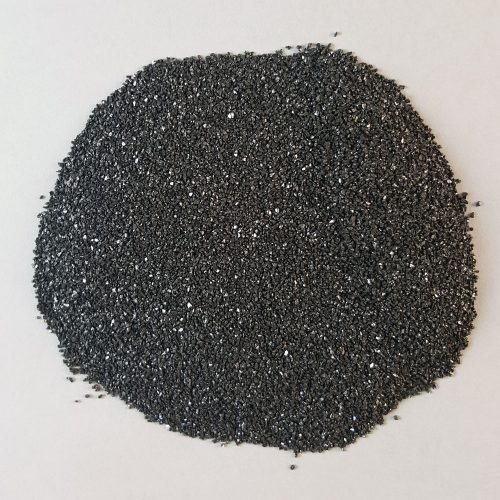
Silicon Carbide Grit Blasting Media
Price range: $39.95 through $430.00 Learn MoreSilicon Carbide Grit is the hardest abrasive media. This blasting media has very fast cutting action and can be recycled and re-used many times. The hardness of Silicon Carbide Grit allows for shorter blast times relative to other blasting media.
-

Walnut Shell Blasting Media Grit
Price range: $39.95 through $115.00 Learn More Walnut Shell Grit is a versatile, organic media. It is an angular media that is soft and sensitive to many surfaces. Walnut Shell Grit is an economical, biodegradable alternative for sensitive operations that require a moderately aggressive media.
 -

Glass Bead Blasting Abrasive Grit
Price range: $39.95 through $99.00 Learn MoreGlass Beads are a round, spherical media that produce a softer and brighter finish angular medias. Glass Beads are used for blasting, peening, honing, cleaning, and light deburring. -

Corn Cob Media Grit
Price range: $39.95 through $95.00 Learn MoreCorn Cob Media is a biodegradable media this will not etch or warp thin-walled or soft surfaces. A low hardness and absorbent media ideal for many blasting and tumbling applications. -

Pumice Grit
Price range: $39.95 through $184.50 Learn MorePumice is a natural mineral sourced from volcanic ash. It is a light, soft abrasive used in a wide variety of applications. As a natural product, variability from sources provides unique performance properties. -

Steel Shot Blasting Media Abrasive
Price range: $59.95 through $144.50 Learn MoreSteel Shot is ideal for peening applications to impart a clean, smooth finish. This dense, smooth media can be used up to 3,000 times and produces minimal dust during the blasting process. -

Urea (Type II) Plastic Abrasive Grit
Price range: $49.95 through $180.00 Learn MoreUrea (Type II) Plastic Abrasive Grit is the most heavily used plastic media. Urea Plastic Abrasive Grit is used for applications such as auto and aircraft restoration to deliver an efficient strip rate without damage or warping of the substrate surface. -

Melamine (Type III) Plastic Abrasive Grit
Price range: $49.95 through $180.00 Learn MoreMelamine (Type V) Plastic Abrasive Grit is the hardest plastic media used for applications that require a high strip rate without damage to the sub-surface. Melamine Plastic Abrasive is the perfect balance of speed and performance. -

KramBlast Crushed Glass Grit
Price range: $21.95 through $38.50 Learn MoreKramBlast Crushed Glass Grit is a silica-free, consumable abrasive that offers aggressive surface profiling and coatings removal. Manufactured from 100% recycled bottle glass, KramBlast Crushed Glass Grit produces a whiter, cleaner finish relative to mineral/slag abrasives. -

Garnet Grit Blasting Media
Price range: $39.95 through $94.00 Learn MoreGarnet Grit is a used for a wide variety of blasting applications. Used in both dry and wet abrasive blasting, Garnet Grit offers high performance and recyclability. The hardness and bulk density make this media ideal for general purpose surface preparation. -

Acrylic (Type V) Plastic Abrasive Grit
Price range: $54.95 through $265.00 Learn MoreAcrylic (Type V) Plastic Abrasive Grit is the softest plastic media used for ultra-sensitive surfaces while still providing an effective strip rate. Acrylic Plastic Abrasive Grit is the longest lasting and is used for aircraft surfaces and delicate parts. -

Steel Grit Blasting Media
Price range: $54.95 through $169.00 Learn MoreSteel Grit is an angular, carbon steel media designed for quick and effective removal of surface contaminants and coatings. Steel Grit is softer than other media and is less likely to fracture leaving an etched finish.