The world of surface preparation and metal cleaning is a constant battle against paint, rust, grease, oxidation, and other unwanted contaminants. Two of the most effective methods used across industrial applications are the media blast cabinet process and traditional sandblasting. While both techniques are designed to clean and prepare surfaces, they differ significantly in precision, containment, abrasive media handling, and ideal applications. Understanding these differences helps manufacturers, fabricators, and finishing professionals select the right blasting solution for their specific requirements.
The Media Blast Cabinet: A Controlled Environment for Precision Surface Preparation
A media blast cabinet provides a controlled and enclosed environment where abrasive media removes surface contaminants with exceptional precision. Inside the cabinet, compressed air propels abrasive media against the workpiece, efficiently removing paint, corrosion, rust, oxidation, scale, and other contaminants while protecting the surrounding workspace.
Unlike open blasting methods, a media blast cabinet contains the abrasive media within the enclosure, minimizing dust, reducing media loss, and improving operator safety. This controlled environment also allows operators to achieve highly consistent surface finishes while reducing the risk of damaging delicate components.
A media blast cabinet is often the preferred solution for precision applications involving engine components, aerospace parts, fabricated metal products, tooling, stainless steel, aluminum, and other intricate parts where surface quality and consistency are critical.
Sandblasting: High-Powered Cleaning for Heavy-Duty Applications
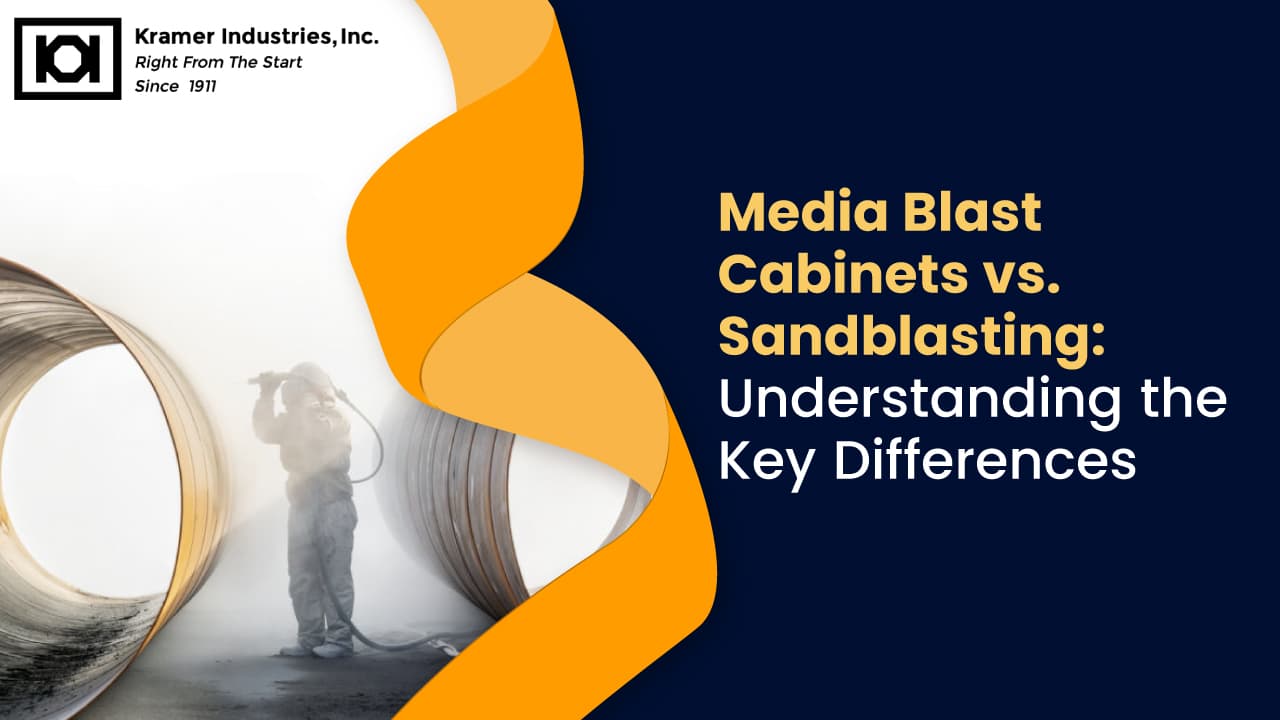
Sandblasting remains one of the most aggressive surface preparation methods available. The process uses high-velocity abrasive particles to remove heavy rust, paint, scale, and stubborn contaminants from metal and other durable materials. Its speed and cleaning power make it ideal for large industrial structures and heavily corroded surfaces.
However, because of its aggressive nature, sandblasting requires careful control. Excessive blasting pressure or improper media selection may damage softer materials or produce an undesirable surface profile. While sandblasting excels at rapid material removal, it generally offers less precision than a blast cabinet, particularly when working with sensitive or detailed components.
Choosing Between a Media Blast Cabinet and Sandblasting
Selecting between a media blast cabinet and sandblasting depends on your production requirements, material type, surface condition, and desired finish.
Speed vs. Control
Sandblasting removes heavy contamination quickly, making it well suited for large industrial cleaning projects. A media blast cabinet, however, offers greater operator control, allowing only the required material to be removed while preserving the integrity of the workpiece.
Environmental Considerations
Because it is fully enclosed, it significantly reduces airborne dust, abrasive loss, and environmental contamination. This creates a cleaner work environment while improving media recovery and reuse. Traditional sandblasting typically produces more airborne dust and often requires additional containment measures.
Precision vs. Power
It is the preferred choice for precision cleaning, deburring, finishing, and delicate surface preparation. Sandblasting remains the better solution for large-scale industrial cleaning where aggressive material removal is the primary objective.
The Blasting Process: How Each Method Works
Although both processes rely on compressed air and abrasive media, their applications and operating environments differ considerably.
Media Blasting
Media blasting uses compressed air to propel carefully selected abrasive media toward the workpiece. Inside a blast cabinet, the enclosed workspace allows operators to maintain consistent blasting pressure while collecting and reclaiming reusable abrasive media. This process delivers excellent cleaning efficiency with minimal environmental impact, making it ideal for aerospace components, automotive parts, precision machining, stainless steel, aluminum, and fabricated products.
Soda Blasting
Soda blasting is a specialized form of media blasting that uses sodium bicarbonate as the abrasive media. Because the media is much softer than conventional abrasives, soda blasting effectively removes paint, grease, and light contaminants without damaging the underlying substrate. It is commonly used for delicate restoration projects, automotive applications, copper surfaces, and components requiring minimal surface profile changes. While highly effective for certain applications, soda blasting is more specialized than a standard cabinet and may not provide the versatility required for heavy industrial cleaning.
Sandblasting
Sandblasting propels abrasive particles at high velocity to rapidly remove rust, paint, mill scale, and heavy surface contamination from durable materials including steel, cast iron, aluminum, brass, titanium, tungsten carbide, and concrete. The aggressive cleaning action delivers excellent productivity but requires proper media selection and operator experience to prevent excessive surface damage.
The Fine Line Between Power and Precision
Although media blasting, soda blasting, and sandblasting all remove surface contaminants, each process offers distinct advantages depending on the application.
- A media blast cabinet provides exceptional precision for cleaning, deburring, and finishing stainless steel, aluminum, aerospace components, engine parts, and other delicate materials.
- Soda blasting is ideal for non-ferrous metals, painted surfaces, restoration work, and applications requiring minimal abrasion while effectively removing paint, grease, and oxidation.
- Sandblasting delivers maximum cleaning power for heavy industrial applications involving structural steel, concrete, castings, and heavily corroded surfaces where aggressive material removal is required.
Selecting the appropriate blasting process improves surface quality, minimizes material damage, and increases overall production efficiency.
Cleanup: Media Blast Cabinet vs. Sandblasting
One of the major advantages of using a media blast cabinet is its enclosed design. During blasting operations, abrasive media and removed contaminants remain inside the cabinet, allowing efficient collection, media recovery, and proper disposal. Many blast cabinet systems also include reclaim and dust collection systems that extend abrasive life while reducing waste and operating costs.
Traditional sandblasting typically generates larger amounts of airborne dust and spent abrasive. Although it can clean surfaces quickly, additional cleanup and containment measures are often required after blasting, particularly in industrial or outdoor environments.
The Hidden Challenge of Blasting: Slopping
One challenge associated with soda blasting is a condition commonly referred to as slopping. During the blasting process, removed paint, grease, rust, and sodium bicarbonate combine to form a heavy residue that must be thoroughly cleaned before additional finishing operations such as powder coating or painting can begin.
A media blast cabinet using conventional abrasive media generally produces less residue and allows easier cleanup through integrated dust collection and media recovery systems. Sandblasting also avoids the sludge created during soda blasting but produces larger amounts of dry dust that must be properly controlled.
The Verdict: Media Blast Cabinet or Sandblasting?
Both blasting methods offer valuable advantages when selected for the appropriate application.
A media blast cabinet is the preferred solution for manufacturers who require precision, repeatability, operator safety, and environmental control. Its enclosed design minimizes abrasive waste, improves visibility, protects operators, and delivers consistent surface finishes across a wide variety of materials.
Sandblasting remains the better option when maximum cleaning power is needed for large industrial structures, heavily rusted equipment, structural steel, concrete, and other demanding surface preparation applications where aggressive material removal is the priority.
Choosing between a media blast cabinet and sandblasting ultimately depends on your material, production requirements, surface finish specifications, and operating environment. Selecting the right blasting system helps improve productivity, extend equipment life, reduce operating costs, and consistently achieve high-quality finishing results.
Looking for the right blast cabinet for your application? Kramer Industries offers high-quality media blast cabinets, abrasive blasting equipment, and expert technical guidance to help manufacturers achieve efficient, precise, and repeatable surface preparation. Contact our team today to find the ideal blasting solution for your operation.
Frequently Asked Questions (FAQs)
- What is a media blast cabinet used for?
A media blast cabinet is used for cleaning, deburring, surface preparation, paint removal, rust removal, and finishing parts in a controlled, enclosed environment while minimizing dust and abrasive loss.
- Is a media blast cabinet better than sandblasting?
It is better for precision work, delicate components, and enclosed blasting applications, while sandblasting is better suited for heavy-duty industrial cleaning and large surface areas.
- What materials can be cleaned in a media blast cabinet?
Media blast cabinets are commonly used for steel, stainless steel, aluminum, brass, cast iron, titanium, composites, automotive parts, aerospace components, fabricated products, and precision-machined parts.
- Can abrasive media be reused in a media blast cabinet?
Yes. Most media blast cabinet systems include media recovery and reclaim systems that allow abrasive media to be reused multiple times, reducing operating costs.
- How do I choose the right media blast cabinet?
Consider the size of the workpieces, production volume, abrasive media type, dust collection requirements, cabinet dimensions, reclaim system, and desired surface finish before selecting a media blast cabinet.
Related Articles