
Among the titans of the surface preparation industry stand two distinct media: glass beads and aluminum oxide grit. Each carries its own technique, personality, and even purpose. But the real question that comes to the mind of every fabricator, restorer, and technician is this: glass bead vs aluminum oxide grit: which one earns its place in your surface finishing?
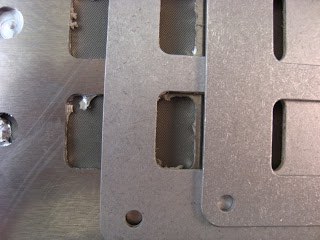
To find clarity in this debate, we must begin by observing their effect on the aluminum part. A side-by-side comparison unveils a tale of contrast. The aluminum oxide-treated piece is darker and deeply etched. It echoes with industrial tenacity. The glass bead-blasted surface is smoother and gleaming. It echoes precision and subtlety.
The Force Behind the Finish: Aluminum Oxide Grit
When your goal is to carve away peels before reconstruction, look no further than aluminum oxide grit. This abrasive is like a scalpel. It tears through corrosion, peels off stubborn coatings, and removes rust until only the bare substrate remains. The harshness is intentional and designed to cut deep into steel or concrete.
When it comes to glass bead vs aluminum oxide grit, the force on the surface decides the extent of the mission. Aluminum oxide grit is not gentle. Its hardness lends it extreme durability, allowing for multiple uses without losing its edge. Economically, it stretches your dollar while shrinking your labor. Environmentally, it earns points for being recyclable, an uncommon trait in aggressive abrasives.
And it goes beyond cleaning. It’s about preparing a surface for work, such as coatings, welds, and bonding. The grit moves away the impurities and reshapes the microscopic substrate, giving primers and adhesives the textured valleys they need for adhesion.
Gentle Artistry: Glass Bead Blasting
In contrast, glass bead blasting is more about an artistic touch. It’s about precision over brute strength. When faced with the challenge of cleaning without damaging, especially softer materials like aluminum or delicate alloys, glass beads are the savior of these surfaces.
What emerges from the glass bead vs aluminum oxide grit conversation is this: while aluminum oxide digs deep into the surface, glass beads gently rub against it. Their round shape gives them a peening effect—an ability to smooth out while strengthening. The resulting finish is a satin elegance that is uniform, lustrous, and impressively professional.
Glass bead blasting enhances the surface too. By minimizing surface defects, it prepares the surface for paint, polish, or coating without introducing new flaws. And in sectors where visual appeal matters, such as automotive, aerospace, and even sculpture, this matters deeply.
From a sustainability standpoint, glass beads are non-toxic, recyclable, and safe to handle. Their lack of heavy metals or chemical residue makes them a favorite for operations conscious of both health and footprint.
Glass Bead vs Aluminum Oxide Grit: Use Cases and Choices
Let’s start the glass bead vs aluminum oxide grit dialogue on its purpose. If your surface is hardened steel, caked with decades of abuse, and needs aggressive cleaning, aluminum oxide grit is your ideal ally. It pulverizes problems and prepares the toughest materials for transformation.
If your project involves precision, aesthetics, or lighter metals like aluminum, then glass bead blasting is the more discerning choice. It offers a fine balance of cleaning and finishing, all without compromising the material beneath.
In many industrial settings, the choice isn’t either/or—it’s both. Initial heavy blasting with aluminum oxide grit followed by a finishing pass with glass beads is a common practice. The grit breaks down the problem, and the beads refine the result
Texture, Adhesion, and Longevity: Glass Bead vs Aluminum Oxide Grit
Texture, though invisible to the eye, is often the decider between failure and success in coatings. Here’s where the comparison of glass bead vs aluminum oxide grit grows more nuanced. Aluminum oxide leaves a coarse, angular profile that is perfect for mechanical adhesion. Glass beads, with their roundness, leave a smoother surface, but one that’s still ready for paint or plating.
Longevity also leans in favor of aluminum oxide in aggressive applications. Its hardness means longer service life. But for delicate operations, glass beads offer the ideal compromise between effectiveness and material safety.
Intention Decides the Selection of Abrasive
There is no outright winner in the glass bead vs aluminum oxide grit debate; only choices. Context is king, and intention decides the selection of the abrasive. Are you cleansing with care or stripping with strength? Are you preparing for elegance or endurance?
Each abrasive holds the power to remove and define the character of the surface it touches. When wielded with understanding, they turn metal into a work of art.
Conclusion
When choosing between glass bead vs aluminum oxide grit, the decision is far more than technical. It’s about choosing to approach your surface with force or finesse, with speed or with subtlety. Many times, you don’t always have to choose one over the other.
A typical surface preparation method starts with aggressive blasting using aluminum oxide grit to tackle tough contaminants and irregularities. This is then followed by a gentle finishing pass with glass beads to smooth and refine the surface. Together, they deliver a clean, uniform finish that’s ready for coating or further processing.
Looking to achieve precision in every blasting step? Trust Kramer Industries for premium aluminum oxide grit and glass beads that meet the highest performance standards. Contact Kramer Industries today.
Frequently Asked Questions (FAQs)
- What is the difference between glass bead and aluminum oxide grit?
Glass beads provide a smooth, polished finish, while aluminum oxide grit delivers a rougher, more aggressive surface ideal for heavy cleaning and surface prep. - When should I use aluminum oxide grit?
Use aluminum oxide for removing rust, paint, and coatings from hard materials like steel or concrete. It’s ideal for deep cleaning and surface profiling. - When should I use glass bead blasting?
Glass beads are best for cleaning softer metals like aluminum or when a smooth, satin finish is desired without surface damage. - Which media offers better adhesion for coatings?
Aluminum oxide grit creates a rough texture that enhances mechanical adhesion, making it ideal for primers and coatings. - Is glass bead blasting environmentally friendly?
Yes. Glass beads are non-toxic, recyclable, and contain no harmful chemicals or heavy metals. - Can both abrasives be used together?
Yes. Many professionals first use aluminum oxide for aggressive cleaning, then glass beads for a refined, uniform finish. - Which abrasive lasts longer?
Aluminum oxide has higher hardness and durability, making it suitable for longer use in tough applications. - Does glass bead blasting strengthen the surface?
Yes. The peening effect of glass beads helps relieve stress and improve fatigue resistance of metal parts. - Are both media reusable?
Yes, both glass beads and aluminum oxide grit can be reused multiple times, depending on the application and blasting pressure. - Where can I buy quality blasting media?
Kramer Industries offers high-performance glass beads and aluminum oxide grit for professional surface finishing needs.
Related Articles