In manufacturing, the appearance of metal surfaces speaks volumes. They talk about wear, time, treatment, and readiness for tasks. When prepping a surface for coating, removing all unwanted residues, or simply giving a part a good and functional aesthetic, the surface counts. It can either elevate or compromise the final product.
Glass beads blasting is an often underestimated process, but it is highly effective. It cleans, peens, and finishes metal surfaces with a gentleness that sandblasting simply is not capable of. This isn’t just about shine. It is achieved with precision, preservation, and perfection.
The Science Behind Glass Beads Blasting
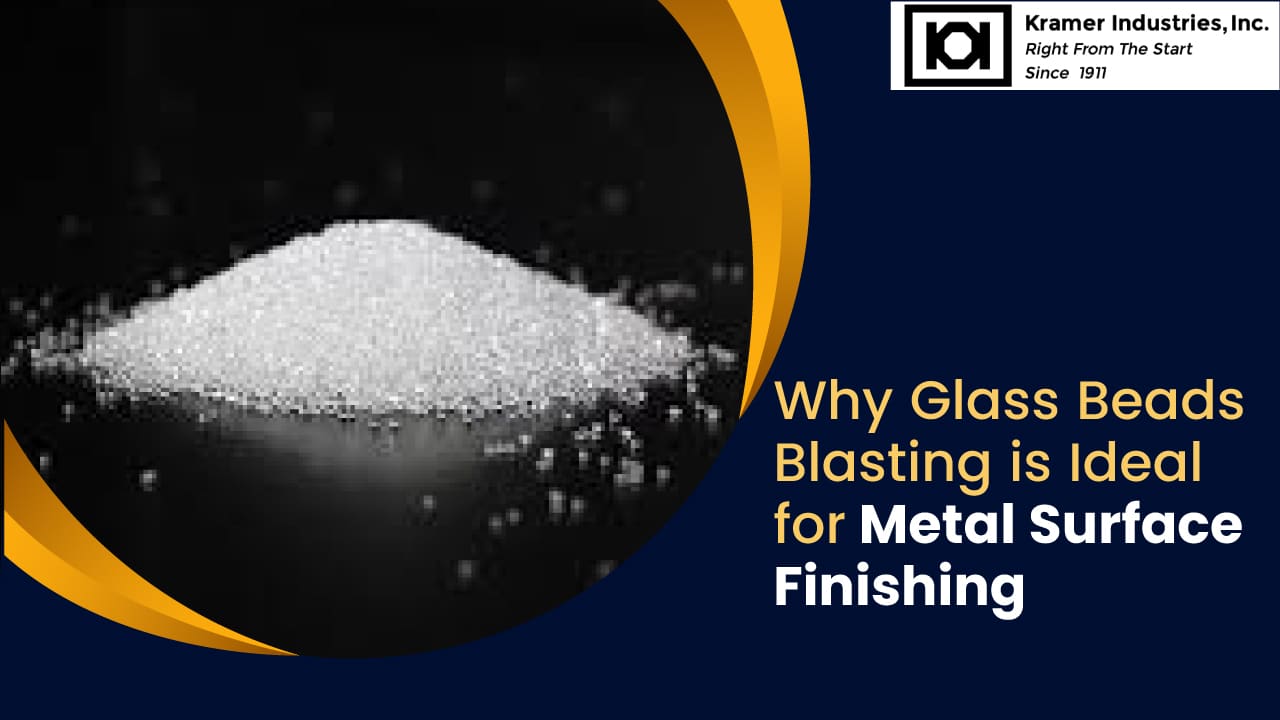
Glass beads blasting is a cold, dry abrasive blasting technique. Here, the machine propels fine spherical glass beads at high velocity toward a metal surface. Compressed air is used to propel the beads. These beads are chemically inert, non-toxic, and impact the surface with uniform force.
Traditional abrasive methods have been found to cut and erode the surface. Unlike that, glass beads work by a method called “peening.” They gently strike the surface, removing impurities, and what is left behind is a clean, satin-like finish. The spherical shape of the media gives even coverage. Thus, there is no damage to the base material.
The added advantage of glass beads blasting is that while removing unwanted materials like rust or paint, it also adds to its surface cohesion. This is notable because it makes future coatings adhere more reliably.
Glass Beads Blasting vs. Sandblasting
Both techniques serve to clean and prepare metal. However, they work in different ways and give vastly differing results.
Sandblasting is often referred to as grit blasting. Using angular particles like aluminum oxide or crushed glass, sandblasting can abrade the surface aggressively. This method is fast and effective for stripping heavy coatings or shaping rough parts. However, it often leaves the underlying material vulnerable. Sometimes, the substrate is etched, weakened, and distorted, particularly in thinner or softer metals.
Glass beads blasting, in contrast, is slower and more deliberate. It cares about surface preservation and leaves no embedded particles or microfractures. It’s the ideal method when you need the job done carefully and quickly.
The Subtle Strength of Glass Beads
Despite its gentleness, glass beads blasting is no pushover. It’s capable of:
- Removing surface oxidation (rust)
- Cleaning oil and grime
- Eliminating burrs from machining
- Stripping thin paint or coatings
- Preparing surfaces for secondary processes like anodizing or powder coating
And it does all of this while leaving the underlying material dimensionally intact. This is a major advantage when precision is paramount.
When to Use Glass Beads Blasting
Think of glass beads blasting as your go-to solution when delicacy, detail, and surface integrity matter most. Ideal scenarios include:
- Deburring parts with intricacies: It removes fine burrs without damaging the geometry of the part.
- Surface prepping before coatings: The slightly textured finish enhances paint and powder coat adhesion.
- Refinishing without reshaping: The parts have the same dimensions before and after the process.
- Maintaining aesthetic quality: The final look is satin-smooth and non-reflective.
It’s a favorite in industries where tolerance is tight and appearances matter. Hence, it finds great use in aerospace, medical device manufacturing, automotive restoration, and electronics.
Media Size: A Small Detail with a Big Impact
Glass beads come in quite a wide range of sizes that go typically from 40 microns up to around 850 microns. Smaller beads create a more refined finish that is smooth satin or matte. The use of larger beads results in a coarser, more textured surface. This type of surface can help mask imperfections and give coatings something extra to grip.
Choosing the right bead size is the first step to doing the job correctly. For example:
- Fine media (e.g., 60–100 mesh): Use fine media when you are dealing with delicate surfaces and you aim to have a subtle finishing or a final polishing.
- Coarse media (e.g., 20–30 mesh): Use coarse media when you have to do heavy-duty cleaning and aggressive peening is needed. This will also create a textured surface.
Matching media size to application ensures optimal results. It helps to get the texture right without overworking or undercleaning the surface.
Surface Integrity
A smooth surface has other properties than attractiveness. It can reduce friction and increase lifespan. It also improves corrosion resistance. There are industries like food processing and pharmaceuticals where cleanliness is critical. Beyond the need for aesthetics, there is also the need for compliance in these industries.
Glass beads blasting refines the look of metal and improves its functionality:
- Reduced risk of stress corrosion cracking
- Improved fatigue resistance due to uniform compressive stress from peening
- Enhanced bonding for paints, sealants, and other coatings
It’s all about creating a surface that works harder and lasts longer.
Industry Applications
Glass beads blasting can be used across a wide range of sectors, that is how versatile it is. Some key examples:
- Aerospace: Prepping turbine blades, cleaning complex alloys, deburring precision parts.
- Medical: Finishing surgical tools, orthopedic implants, or dental equipment without leaving residues.
- Automotive: Restoring classic car parts, removing paint, or cleaning engine components.
- Electronics: Removing oxidation from connectors or micro components without structural compromise.
- Art and Design: Finishing custom sculptures or metal installations with a professional matte look.
Where precision meets performance, glass beads blasting follows.
Sustainability and Reusability
Some abrasive media break down quickly and become contaminated after one use. However, that is not how it works for glass beads. Glass beads can typically be reused up to 30 times or more. The number of times it can be used depends on the application. This makes the process not only cost-effective but environmentally responsible.
Additionally, the glass beads themselves are chemically inert. They are made from recycled materials. There is no embedded dust, no chemical residue, and no environmental hangover when you are working with them.
Final Thoughts
There are tools that shape, and there are tools that refine. Glass beads blasting belongs to the latter. It’s not the fastest or the most aggressive method, but it’s reliable, efficient, and thoughtful.
In manufacturing, finesse matters. And sometimes, a polished finish isn’t a luxury; it’s the final requirement. From removing a microscopic burr to prepping a titanium implant, the way you treat your surface says everything about the quality of your process. So, if you need a clean, consistent, and non-destructive finish, glass beads blasting is the right choice.
From fine-tuning a high-precision part to prepping metal for the perfect coat, Kramer Industries has the tools, media, and expertise to get you there. Reach out to Kramer Industries today and discover how glass beads blasting can transform your production process.
Related Articles