Mass finishing is a process that improves the surface of parts. In this process, a rough, dull part is finished until it becomes smooth and shiny. The goal is to remove all the rough spots, improve the surface, and make the parts look much better.
There are two ways to do this: vibratory tumbling or barrel tumbling. Each has its list of good and bad features. Knowing all of the benefits and downsides of both helps you choose the right method for your finishing job.
Barrel Tumble Finishing
The first step in barrel tumbling is to place the parts to be finished, the abrasive media, and a suitable compound inside a rotating barrel. As the barrel spins, all these materials tumble over themselves, creating friction that starts to abrade the parts. This movement results in the removal of burrs, rust, or other unwanted materials from the workpieces.
Despite being somewhat old-fashioned, barrel tumble finishing has a lot of advantages:
1.Cost Efficiency
Barrel tumblers are relatively simple machines. This simplicity translates into a lower purchase price and easier operation, making barrel finishing one of the most budget-friendly finishing methods. There’s no need for overly complicated systems, and that means lower equipment costs.
2.Aggressive Action
Barrel finishing is known for its high level of aggression. If you have tough, hard-to-remove imperfections on a surface, barrel tumbling can power through it. This method is particularly well-suited for difficult jobs where other finishing techniques might fall short.
3.Consistency over Hand Finishing
While not as precise as some other finishing techniques (more on that later), barrel tumbling offers significantly more consistency than finishing parts by hand. It’s a huge time saver and results in a more uniform finish.
4.Flexibility for Various Jobs
From deburring to rust removal and oil cleanup, barrel tumbling machines can be customized for a wide range of tasks. While they’re not always as precise, their versatility is a huge benefit.
That being said, there are some drawbacks to barrel tumble finishing. Since the parts tumble onto each other during the process, there’s a higher chance of surface indentations. The pieces may collide with enough force to cause small dings or scratches. Additionally, the barrel method generally takes longer to complete the finishing process compared to vibratory systems.
Vibratory Tumbling: The Gentle Touch with Power

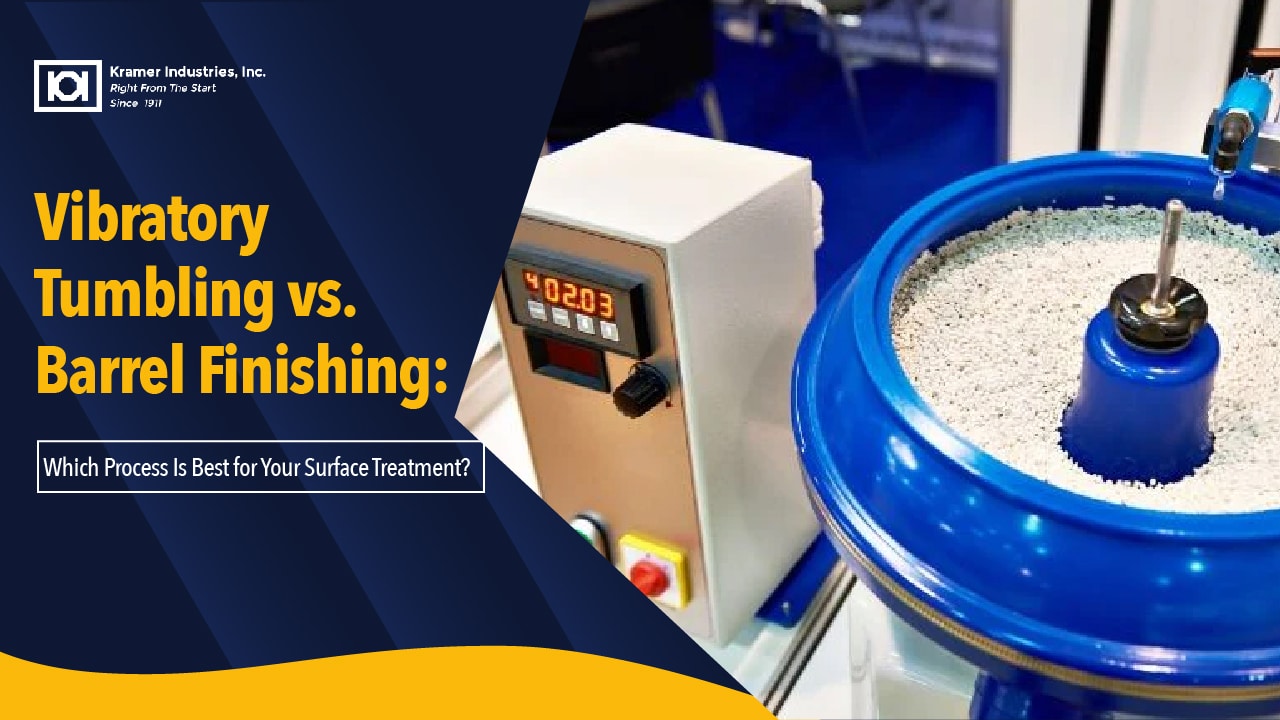
Vibratory Tumbling is newer and gives more control. In this method, parts, cleaning materials, and compounds are placed together in a vibrating bowl or tub. The controlled shakes make the parts and materials rub against each other. While doing so, they remove all of the sharp edges, smoothen surfaces, and clean off unwanted dirt. This process is much gentler than barrel tumbling but still works well.
Here’s why vibratory finishing is often the preferred choice for many manufacturers:
1.Precision and Flexibility
Vibratory tumbling is ideal for parts that require a more delicate touch. The vibratory action provides a controlled abrasion, which makes it great for jobs that demand tight tolerances. It’s especially good for polishing larger or more delicate parts without damaging them.
2.Versatile Applications
Whether it be deburring, cleaning, polishing, or some other preparation, vibratory finishing can handle the task. The process is quite versatile, and manufacturers have the choice of either wet or dry finishing techniques, depending on the material and required finish. Wet finishing is more common and tends to produce cleaner, more polished surfaces, while dry finishing is better for certain specialized tasks.
3.Eco-Friendly
Wet vibratory finishing uses recycled water, making it more environmentally friendly. The water helps to remove debris and keeps the media clean while also ensuring a smoother surface.
4.Higher Throughput and Lower Maintenance
Vibratory tumblers can process huge numbers of parts in one go. In other words, this translates into greater efficiency and this results in faster turnaround times. Plus, vibratory finishing machines require less maintenance, which means fewer downtimes for repairs or cleaning.
5.Protects Fragile Parts
Vibratory systems create a lot of friction, but their design ensures that even fragile materials, like ceramics or polymers, are handled gently. This makes vibratory tumbling the go-to option for finishing sensitive parts without damaging them.
6.Energy Efficiency
Vibratory finishing is semi-automated, saving on labor and overall costs. It provides more energy for the finishing process compared to traditional methods, resulting in smoother surfaces without overworking the machinery.
Which is Best for You?
It depends on what your project needs—whether barrel tumbling or vibratory tumbling is the better choice for finishing your parts.
Most large-scale finishing jobs are best done with vibratory finishing. They get done faster and more efficiently. Besides, they provide much better accuracy for jobs that need precision. When you are working with big or delicate parts that can’t handle rough treatment, vibratory finishing is surely the better option.
On the other hand, barrel tumbling is better for much tougher jobs. It works well, especially with small parts that can handle rougher treatment. It is also quite a cheaper option if you are on a tight budget and really don’t need the precision of vibratory finishing.
| Feature | Barrel Tumbling | Vibratory Tumbling |
| Process | Parts roll over each other in a spinning barrel, creating friction. | Parts vibrate against cleaning material in a vibrating bowl or tub. |
| Strength | Very strong; good for tough jobs and removing heavy rough edges. | Softer process; better for polishing and delicate parts. |
| Machine Cost | Lower; simpler design and use. | Higher; more advanced machine features. |
| Precision | Less accurate; may cause marks or damage. | More accurate and controlled; better for delicate jobs. |
| Speed | Slower process. | Faster process; better for large jobs. |
| Uses | Good for removing rust, rough edges, and cleaning. | Can be used for many materials, including plastics, metals, and ceramics. |
| Maintenance | Needs regular care but is simple. | Low maintenance; more automated, leading to faster work. |
| Handling Materials | Parts may get damaged due to rolling impact. | Protects delicate parts; gentle on materials. |
| Finish Quality | Rougher finish with possible wear. | Smoother, cleaner finish with less wear. |
| Customization | Basic options. | Easy to adjust for different jobs (wet/dry finishing). |
| Common Uses | Best for tough tasks like rust removal and surface cleaning. | Best for polishing, smoothing, and preparing surfaces. |
| Eco-Friendliness | Uses less water but not as green. | Wet methods can recycle water, making it better for the environment. |
| Labor Costs | Higher labor costs due to less automation. | Lower labor costs because of partial automation. |
Comparing Costs: Barrel vs. Vibratory Tumbling
Vibratory finishing machines are usually more advanced than barrel tumblers and cost more to buy. They also cost more to maintain. However, vibratory tumblers save money over time because of their efficiency. They work faster, improve accuracy, and reduce labor costs.
Barrel tumbling machines are cheaper to buy and operate. However, because they take longer and can damage parts, they may end up costing more in labor and wasted materials. They also wear down cleaning materials much faster. This could lead to increasing costs.
Conclusion
Choosing the right method depends on your finishing needs. If you are looking for accuracy and faster results, vibratory finishing is quite a good option. For those working with delicate parts, vibratory finishing is the best choice. If you need strong, rough finishing at a lower cost, barrel tumbling is a good choice. Both methods play an important role in surface finishing.
About Kramer
If you’re in need of high-quality barrel or vibratory tumblers, Kramer Industries is the go-to expert. With a range of durable, efficient solutions, we have the right tools for all your surface finishing needs. Get in touch with Kramer Industries to elevate your mass-finishing process today.
Related Articles